How Local Oil Recyclers Deliver Better Service to Restaurants
How Local Oil Recyclers Deliver Better Service to Restaurants
If you run a restaurant, you already know that grease is one of those problems that never really goes away. Fryers keep producing used oil, grease traps keep filling up, and somewhere in the back of your mind you're wondering whether your current setup is actually working for you or just working around you. This is where the choice between a local oil recycler and a large national provider starts to matter more than most restaurant owners realize.
Used cooking oil recycling isn't just about hauling away a barrel of grease once a week. It's about consistency, compliance, and having someone who actually understands the rhythm of your kitchen. Local providers tend to do this better, and in this article, we'll walk through exactly why that is, what it means for your day-to-day operations, and how to evaluate whether your current oil recycling partner is pulling their weight.
Why the Size of Your Oil Recycler Actually Matters
Restaurant owners often assume that bigger companies mean better service. More trucks, more coverage, more resources. In practice, the opposite is frequently true.
National and regional oil collection companies operate on tight, centralized routes designed for efficiency across hundreds of locations. Your restaurant becomes a stop on a spreadsheet, not a relationship. When your fryer output changes because of a seasonal menu shift or a busy holiday weekend, that route doesn't flex. You either overflow your storage container or you call a support line and wait.
Local recyclers work differently. They typically serve a smaller, defined region, which means they know their customers by name, understand local seasonal patterns, and can actually adjust pickup schedules without escalating through three layers of customer service.
The Real Cost of Inflexible Service
An oil collection schedule that doesn't match your restaurant's actual output creates problems you can see and problems you can't.
The visible ones are obvious: overflowing containers, oil pooling near your back door, and the smell that comes with it. The less visible ones show up later, in the form of pest complaints, health inspection notes, or a grease trap that backs up because nobody caught the early warning signs.
Faster Response Times Make a Real Difference
When a container is full three days before the scheduled pickup, that's not a minor inconvenience. It's a safety hazard, a compliance risk, and honestly, a bad look if a customer or inspector walks by your back area.
Local oil recyclers can typically respond within a day or two because their trucks are already in your neighborhood. Large providers routing from a regional hub might take a week or longer to accommodate an off-schedule request, if they can accommodate it at all.
This responsiveness extends beyond emergency pickups. Local companies are also more likely to:
Adjust pickup frequency during busy seasons without a lengthy contract renegotiation
Send the same technician or team regularly, so they already know your kitchen layout
Answer the phone with someone who can actually make a decision, not a call center reading from a script
Restaurant Oil Disposal Compliance Is a Local Issue
Here's something a lot of restaurant owners don't fully appreciate until they get a violation notice: restaurant oil disposal rules aren't uniform across states, counties, or even cities. Local health departments, wastewater authorities, and environmental agencies each set their own requirements for how used cooking oil and grease waste must be stored, collected, and documented.
A national provider working from a standardized playbook may not account for the specific FOG (fats, oils, and grease) ordinance in your municipality. A local recycler, on the other hand, deals with your city's requirements every single day. They know what your local wastewater authority expects, what documentation your health inspector will ask for, and how to keep you compliant without you having to become an expert in environmental regulation yourself.
For restaurant owners who want to understand the fundamentals of proper disposal before choosing a provider, our guide on used cooking oil disposal breaks down what compliant handling actually looks like from storage to final collection.
What Compliant Oil Disposal Should Include
A proper disposal process, whether handled locally or regionally, should always cover:
Sealed, leak-proof storage containers that prevent spills and pest access
Documented pickup records you can produce if a health inspector asks
Proper transport and processing so the oil doesn't end up illegally dumped
Clear communication about pickup frequency and any changes to your schedule
Local providers tend to be more transparent about all four of these because their reputation in the community depends on it. A single bad review or a compliance failure travels fast in a smaller service area, so local companies have real incentive to get it right every time.
Grease Trap Cleaning: Where Local Knowledge Really Shows
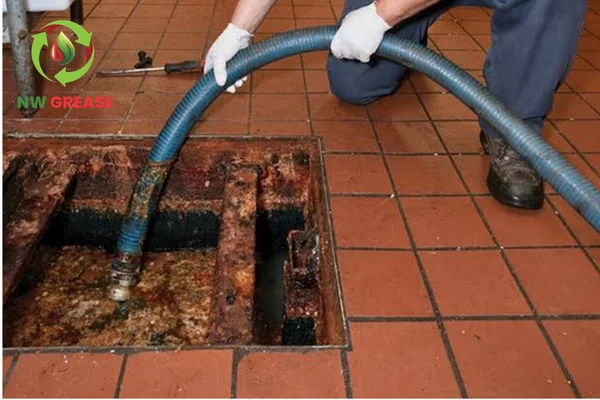
Grease trap cleaning is one of those maintenance tasks that's easy to deprioritize until it becomes an expensive problem. A neglected grease trap doesn't just smell bad. It can cause slow drains, backups, and in serious cases, sewer line blockages that result in costly plumbing repairs and potential fines from your local wastewater authority.
The local provider is likely to be more open about all four of these as their reputation relies on it. When the same company is managing both your used oil collection and your trap cleaning, they can spot patterns, like a trap filling faster than expected, that might indicate a leak, an inefficient pre-rinse process, or equipment that needs attention.
Signs Your Grease Trap Needs Attention
Restaurant staff should watch for a few warning signs between scheduled cleanings:
Slow-draining sinks or floor drains near the kitchen
A persistent sour or rotten smell near the trap or drain lines
Water backing up in sinks during high-volume service
Visible grease buildup around trap lids or access points
A local grease trap cleaning provider who's familiar with your kitchen can often catch these issues during a routine visit before they turn into an emergency call, which tends to cost more and disrupt service during your busiest hours.
Building a Real Relationship, Not Just a Service Contract
One thing that consistently comes up when restaurant owners compare local versus national oil recyclers is the quality of the relationship itself.
With a local provider, you're usually working with people who understand the pressure of running a commercial kitchen. They know that a Friday night rush doesn't leave time for a lengthy phone call, so they keep communication simple and direct. They also tend to be more willing to work around your operating hours instead of asking you to accommodate theirs.
This matters more than it might seem. A provider who understands your business can:
Flag potential issues before they become compliance violations
Recommend adjustments to your storage setup based on what they see during pickups
Offer more flexible billing or scheduling arrangements
Provide a single point of contact instead of a rotating call center
Comparing Local vs. National Oil Recyclers
How to Evaluate an Oil Recycler Before Switching
If you're weighing whether to switch providers, it helps to ask a few direct questions before signing anything. A good recycler should be able to answer these without hesitation.
Ask about their coverage area. A provider that services a tight, well-defined region is more likely to reach your restaurant quickly when something comes up outside the normal schedule.
Ask how they handle emergency or off-cycle pickups. Some providers charge steep fees for anything outside the standard route, while others build a bit of flexibility into their service model.
Ask what documentation they provide. You'll want pickup logs or service records on hand in case a health inspector or wastewater authority requests proof of compliant disposal.
Ask how long they've served restaurants in your area. Longevity in a specific region usually signals a provider who understands local regulations and has built trust with the businesses they serve.
Ask what happens to the oil after collection. A transparent answer about processing and end use is a good sign you're working with a company that takes its environmental responsibility seriously.
Taking the time to ask these questions upfront can save you from a frustrating switch later, especially if your current provider isn't keeping pace with your kitchen's actual needs.
The Cost Impact of Reliable Oil Recycling Service
It's worth addressing the financial side of this directly, because oil recycling isn't just an operational task. It affects your bottom line in ways that aren't always obvious.
A missed or delayed pickup can lead to overflow situations that require emergency cleanup, which usually costs more than a standard scheduled service call. Grease that backs up into a trap or drain line can result in plumbing repairs that run into the thousands of dollars, not to mention the lost revenue from a kitchen that has to pause service to deal with it.
There's also the compliance angle. Fines for FOG violations vary by jurisdiction, but repeat violations can add up quickly and, in some cases, put a restaurant's operating permit at risk. A local recycler who keeps you compliant and on schedule is effectively protecting your business from these avoidable costs.
Finally, some used cooking oil recyclers offer collection at no cost or even provide compensation depending on your volume, since the oil itself has resale value in the biodiesel and renewable fuel markets. It's worth asking your provider directly whether this applies to your restaurant, as terms vary based on location and volume.
Sustainability and Where Your Oil Actually Goes
More restaurant owners are asking a fair question these days: where does the used oil actually go after it's collected? This isn't just a feel-good talking point. It's increasingly relevant to customers who care about where the businesses they support source their supplies and how they handle waste.
Reputable oil recyclers, local or otherwise, typically convert collected used cooking oil into biodiesel or other renewable products rather than letting it go to waste. If you want a broader look at how used cooking oil fits into the renewable commodities market and why proper collection matters on a larger scale, Start Green Commodities offers useful context on the environmental and economic side of oil recycling.
Working with a provider who can clearly explain their disposal and recycling process gives you something real to tell your customers, and it's also simply the right thing to do for your community and local waterways.
Common Mistakes Restaurants Make With Oil Recycling
Even restaurants with a recycling provider in place sometimes run into avoidable problems. Here are a few of the most common ones:
Choosing a provider based on price alone. The cheapest option often comes with the least flexibility, slower response times, and less attention to your specific compliance needs.
Not asking about documentation. If your provider can't easily produce pickup records, you could be caught unprepared during a health or environmental inspection.
Ignoring grease trap maintenance until there's a problem. Reactive cleaning almost always costs more than a consistent maintenance schedule.
Overfilling storage containers between pickups. This is usually a sign the pickup schedule doesn't match your actual oil output, which is exactly the kind of thing a local provider can fix quickly.
Assuming all recyclers handle oil the same way. Ask directly where your used oil ends up and how it's processed.
Expert Tips for Getting Better Service From Your Oil Recycler
Track your fryer output for a month before locking in a pickup schedule, so you're not guessing at frequency
Ask your provider how they handle off-schedule pickups before you need one, not during an emergency
Request documentation upfront so you know what records you'll have available for inspections
Pair your oil recycling with regular grease trap cleaning through the same provider when possible, for more consistent monitoring
Review your service at least once a year to make sure it still matches your restaurant's current volume and needs
Key Takeaways
Local oil recyclers generally offer faster response times because they operate in your immediate area
Local providers tend to have stronger, more current knowledge of regional FOG compliance requirements
Pairing used cooking oil collection with grease trap cleaning creates a more complete picture of your kitchen's grease output
Relationship-based service from a local company often leads to more flexible scheduling and clearer communication
Understanding where your used oil ends up matters for compliance, sustainability, and customer trust
Final Thoughts
Choosing an oil recycling partner isn't a decision most restaurant owners spend a lot of time on, until something goes wrong. A missed pickup, an overflowing container, or a grease trap backup during a busy dinner service has a way of making the choice feel a lot more important in hindsight.
A local provider who understands your kitchen, your city's regulations, and your actual pickup needs tends to prevent these problems before they start, rather than just responding after the fact. That kind of service isn't always about having the biggest fleet or the flashiest contract. It's about being genuinely responsive to the restaurant in front of them.
If your current oil collection or grease trap cleaning service isn't keeping up with your kitchen, it might be time for a conversation with a provider who actually can. NWGrease offers dependable, locally focused used cooking oil recycling and grease trap cleaning throughout Washington and Oregon, built around your kitchen's real schedule rather than a fixed route. Contact NWGrease to set up a collection schedule or ask about grease trap service for your restaurant.
Frequently Asked Questions
1. How often should a restaurant schedule used cooking oil pickups? It depends on your fryer volume, but most restaurants fall somewhere between weekly and monthly pickups. A local provider can help you find the right frequency based on your actual output rather than a generic schedule.
2. What happens to used cooking oil after it's collected? Reputable recyclers process used cooking oil into biodiesel or other renewable products instead of sending it to a landfill or improperly disposing of it.
3. How do I know if my grease trap needs cleaning? Watch for slow drains, unpleasant odors near the trap or drain lines, and visible grease buildup around access points. Regular scheduled cleaning is the best way to avoid emergency situations.
4. Is it legal to dispose of used cooking oil in regular trash or drains? No. Pouring used oil down drains or disposing of it in regular trash typically violates local environmental and wastewater regulations, and can result in fines or plumbing damage.
5. Why would I choose a local oil recycler over a national company? Local providers generally offer faster response times, better familiarity with regional compliance requirements, and more direct, flexible communication compared to standardized national services.
6. Can I get in trouble for improper grease disposal? Yes. Most municipalities enforce FOG (fats, oils, and grease) regulations, and violations can lead to fines, mandatory corrective action, or increased inspection scrutiny.
7. Does NWGrease service both used cooking oil collection and grease trap cleaning? Yes, NWGrease provides both used cooking oil recycling and grease trap cleaning services throughout Washington and Oregon, giving restaurants a single point of contact for their grease management needs.
8. What should I look for when choosing an oil recycling provider? Look for responsive communication, clear documentation practices, transparency about where your oil is processed, and a schedule that genuinely matches your kitchen's output.