Grease Trap vs. Grease Interceptor: Which Does Your Business Need?
What Happens During a Grease Trap Overflow?
The Distinction Between a Grease Trap and a Grease Interceptor
Immediate Steps to Take When Overflow Happens
Why Grease Trap Emergencies Occur
Commercial Grease Trap Cleaning: What Professionals Really Do
How a Restaurant Grease Interceptor Works
Long-Term Damage Caused by Ignoring Overflow
Compliance, Regulations & Required Documentation
How to Prevent Future Emergencies
Sustainable Waste Management in Modern Restaurants
Why NW Grease Is Your Emergency & Maintenance Partner
Final Thoughts
1. What Happens During a Grease Trap Overflow?
A grease trap overflow occurs when your system is too full, too clogged, or mechanically unable to separate fats, oils, and grease (FOG) from wastewater.
When this happens, wastewater has nowhere to go except backward through sinks, floor drains, dishwashers, and even customer-facing areas.
A typical kitchen reacts fast:
Staff tends to panic
Service slows or stops
Odors spread
Hygiene becomes compromised
Safety risks increase
Overflow is not just inconvenient it can trigger health code violations, costly repairs, and even temporary restaurant closure.
This is why emergency grease trap cleaning must be handled immediately by trained professionals.
2. The Difference Between a Grease Trap vs Grease Interceptor
Before we go deeper, it’s important to understand the difference between these two systems. Most restaurant owners use the terms interchangeably, but they are not the same.
Grease Trap
Typically located indoors
Handles smaller volumes of wastewater
Best for small to medium kitchens
Requires frequent cleaning (every 1–3 months)
Grease Interceptor
Larger system located outdoors
Handles high-volume commercial kitchens
Stores large amounts of FOG
Requires less frequent cleaning but more detailed servicing
Search statistics show hundreds of restaurant owners look up grease trap vs grease interceptor every month because improper sizing leads to faster overflows. If your kitchen has outgrown its equipment, overflow becomes much more likely.
A restaurant grease interceptor is recommended for businesses with:
Heavy fryer usage
Large dishwashing volume
Continuous prepping and cooking
Multiple shifts and high foot traffic
Understanding the difference is the first step toward preventing emergencies.
3. Immediate Steps to Take When Overflow Happens
When wastewater begins backing up, follow these steps right away:
1. Shut down all water flow
Turn off sinks, dishwashers, and equipment feeding water into the system.
This reduces the severity of the overflow.
2. Clear the affected area
Wastewater often contains bacteria and contaminants.
Protect staff by clearing the area and preventing access.
3. Turn off electrical appliances nearby
Water and electricity are a dangerous mix.
4. Document everything
Take photos and videos of the backup and the impact zones.
This helps with insurance claims and health inspector interactions.
5. Call an emergency commercial grease trap cleaning specialist
Do not attempt DIY solutions like plungers, hot water, or chemical cleaners.
These can worsen the damage and push grease deeper into the pipes.
6. Notify local authorities if required
Many cities require restaurants to report major FOG spills.
For more sustainability and compliance guidance, visit
4. Why Grease Trap Emergencies Occur
Most overflows can be traced back to one of the following causes:
Lack of Regular Cleaning
Grease traps fill up with FOG, food waste, and sludge over time.
When left too long, they fail.
Incorrect System Size
Many restaurants use traps too small for their daily volume.
High-volume kitchens should switch to a restaurant grease interceptor.
Improper Kitchen Habits
Common mistakes include:
Pouring grease down drains
Allowing food scraps into sinks
Using chemical drain cleaners
Relying on hot water flushing
Equipment Failure
Sometimes pumps, baffles, or lids malfunction, leading to sudden backup.
Poor or Inconsistent Service Providers
Companies that miss cleaning deadlines or underperform on cleanings cause more emergencies.
As you’ll see, proper commercial grease trap cleaning prevents nearly every type of overflow.
5. Cleaning Commercial Grease Traps: Insights into Professional Practices
Emergency grease trap cleaning is highly specialized.
Here’s what professionals like NW Grease perform during a service call:
1. System Inspection
Technicians evaluate:
FOG levels
Drain backup points
Trap or interceptor condition
Structural or mechanical issues
2. Full Pump-Out of Grease Trap/Interceptor
This removes:
Floating grease
Heavy sludge
Sediment
Food debris
Wastewater
3. Water Jetting (If Needed)
High-pressure hydro jetting clears drain lines and pushes hardened grease out of pipes.
4. Deep Scrubbing
Special tools remove buildup from trap walls, baffles, and inlet/outlet lines.
5. System Reset
The system is refilled, inspected for flow, and tested.
6. Waste Transport
FOG waste is taken to recycling facilities for environmentally safe processing.
Some of these facilities, like Kernuco, specialize in refining used oil and FOG waste into renewable resources.
That’s why many restaurants partner with eco-focused companies like Kernuco to ensure responsible disposal.
7. Documentation & Reporting
You receive proper logs for:
Health inspections
Environmental compliance
FOG reporting
Service records
This process ensures your kitchen stays legal, safe, and running smoothly.
6. How a Restaurant Grease Interceptor Works
Most restaurant owners don’t realize how important their interceptor is until it fails.
Here’s a simplified breakdown:
Stage 1: Wastewater Enters
Food scraps, water, and grease flow from sinks into the interceptor.
Stage 2: Cooling
The system cools the wastewater, causing FOG to float and solids to sink.
Stage 3: Separation
Baffles slow the flow to allow separation.
Stage 4: Grease Storage
FOG accumulates at the top until removed by a professional.
Stage 5: Clean Water Exits
Only graywater flows into the sewer system.
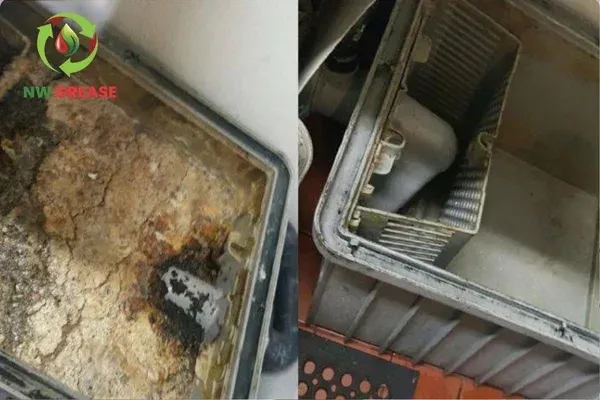
When not cleaned regularly, accumulated grease hardens into thick layers that make your interceptor slow, clogged, and eventually overflow.
7. Long-Term Damage Caused by Ignoring Overflow
A single neglected emergency can cause:
Burst pipes
Blocked sewer lines
Mold growth
Health department violations
Structural damage
Expensive plumbing replacement
Insurance denial
Service shutdown
Most restaurants don’t realize that wastewater contains corrosive components.
Even one overflow can permanently damage plumbing and flooring.
8. Compliance, Regulations & Required Documentation
Depending on your city, you may be required to:
Maintain FOG logs
Clean traps regularly
Install properly sized interceptors
Track all hauled waste
Submit FOG compliance reports
Avoid chemical cleaners
Prevent outdoor spills
Failure to comply can lead to:
Heavy fines
Legal penalties
Mandatory retrofits
Restaurant closure notices
For sustainable waste management and compliance insights, read:
9. How to Prevent Future Emergencies
After experiencing an overflow, prevention becomes more important than ever.
✔ Schedule Regular Commercial Grease Trap Cleaning
Most restaurants need service every 30, 60, or 90 days.
✔ Train Staff on Proper Disposal Practices
Food scraps, grease, and coffee grounds should never go down the drain.
✔ Install a Larger Restaurant Grease Interceptor
For high-volume kitchens, this drastically reduces overflow risk.
✔ Avoid DIY Drain Cleaners
Chemicals melt grease but send it deeper into pipes, where it hardens again.
✔ Request Flow Testing
Professionals can identify slow drainage before it becomes a major problem.
✔ Track Grease Levels
If your trap fills too quickly, you may need more frequent cleanings.
10. Sustainable Waste Management in Modern Restaurants
Modern restaurants are moving toward sustainability not just because it’s good for the environment, but because it helps prevent overflows and fines.
Sustainable practices include:
Recycling used cooking oil
Ensuring proper grease trap waste disposal
Choosing eco-friendly service partners
Reducing food waste
Installing efficient grease interceptors
NW Grease works with environmentally responsible processing facilities so your waste becomes renewable resources not landfill waste.
Brands like Kernuco are at the forefront of this transformation, converting restaurant waste into valuable, usable materials.
11. Why NW Grease Is Your Emergency & Maintenance Partner
At NW Grease, we believe restaurant owners need more than a service they need a reliable partner who understands the urgency of FOG emergencies.
We Provide:
24/7 emergency response
Scheduled maintenance plans
Commercial grease trap cleaning
Grease interceptor servicing
Hydro jetting
Compliance documentation
Sustainable waste management
Fast, professional, reliable service
Our team ensures your kitchen stays safe, compliant, and fully operational without unexpected shutdowns or overflow disasters.
Whether you’re dealing with an emergency or need a long-term maintenance plan, NW Grease has your back.
12. Final Thoughts
A grease trap overflow is stressful, but it doesn’t have to become a catastrophe.
With the right knowledge, the right equipment, and the right partners, your restaurant can stay safe, compliant, and protected from future emergencies.
Remember:
Know the difference between grease trap vs grease interceptor
Take immediate action when overflow occurs
Prioritize consistent commercial grease trap cleaning
Train your staff to protect your plumbing
Partner with sustainable waste management providers
NW Grease is here to keep your kitchen running smoothly today, tomorrow, and long into the future.